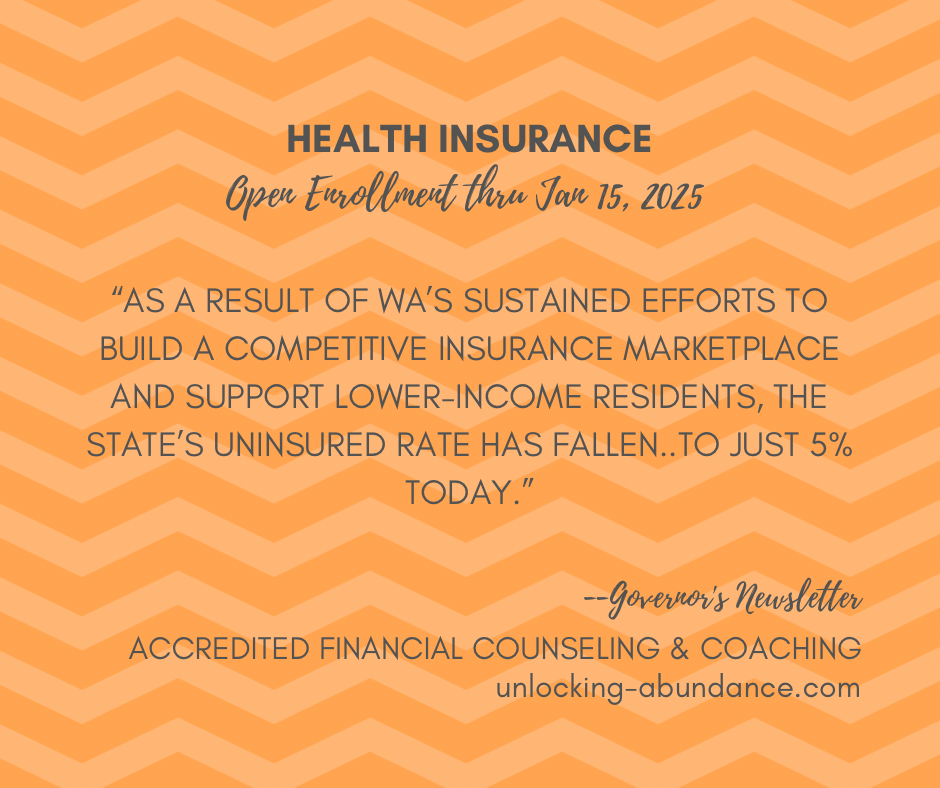
It’s that time of year when we get to choose our healthcare coverage for 2025, otherwise known as Open Enrollment. For a limited time, we can review the options available, understand the upcoming changes, and decide what will work best for us.
Read below for an overview of options for Washingtonians: Individual Plans, including new options on The Exchange, Employer-sponsored plans, navigating additional benefits, and more!
Why is Health Insurance So Expensive?
Premium increases are the norm because the private healthcare system is extremely expensive in the US, and the burden is passed onto the individual. In WA State, individual plan premiums (the monthly payment you owe to have the plan) will see an increase in 2025 of at least 10%+ on average.
The US in general has a healthcare spending problem, as far as the money spent and the results achieved. Current data shows that compared to other developed countries, like ours, we have the highest healthcare costs in the world and we spend 2x more per person on healthcare. The results we receive for this investment do not hold up. We show poorer outcomes including some of the highest mortality rates and rates of depression/suicide.
Health Plan Considerations
If You Already Have a Plan..
Analyze your situation for next year: How is your health? How is your family’s health? Any major life changes in coming up? You may have received a letter from your existing coverage about your plan and it’s cost projections for next year. Do not assume your plan will be exactly the same as it was. Read the fine print and make sure the specific doctor/facilities/medications you will be using will still to be covered.
Think about whether you want to choose a “high deductible” plan or a “low deductible” plan. Deductible is the term for the money you must pay towards the plan (on top of monthly premiums, if you’re required to pay any) in order for the plan to give the maximum benefits. Higher deductible plans are generally cheaper and best for those who plan to use the doctor the least. Tip: If you choose a High Deductible, you may be eligible for a Health Savings Account (HSA), see more on this below.
Lower Deductible plans are best if you have a previous health diagnosis, and you know you will spend a lot of time at the doctor’s office or on expensive medications. Finally, look for your “Out of Pocket Maximum”, this is worst case scenario amount that you will be expected to pay for care, if you have a lot of insurance claims.
If You’re On Your Own and Need to Choose a New Plan..
Individual/Family Plans
As of Jan 1, 2019 there is no longer a penalty for not having health insurance, however, medical debt incurred by having no coverage can be significant. In WA State, plans are offered on The Exchange. This is where you will find individual, family, and self-employed plans.
You may be eligible for a more affordable plan via WA Apple Health. You can check your eligibility for income-based plans that may provide tax credits. Next year, the Cascade Select plan will be available for the first time in all counties in WA. This state-sponsored Public Option plan is based on income and some will have premiums as low as $10/month. Enroll in any plan on The Exchange by JAN 15, 2025, or sooner for coverage to begin Jan 1.
If You Have Health Insurance Through Your Employer..
Your employer may offer health plan coverage as an additional benefit. You might find you have access to either a Flex Spending Account (FSA) or Health Savings Account (HSA) Both are tax efficient ways to save money on out of pocket medical expenses. You get to keep more of your own money because you are essentially getting a discount on medical expenses using the money in these accounts that has never been taxed.
Notes on the FSA: This type of account is owned by your employer, and must be used by the end of year, the funds do not roll over. Understand if the FSA offered to you is for Dependent Care or Health Care. Dependent Care allows you to use the funds in order to pay for qualified day-care expenses and more. For Health Care, you may not have the Dependent Care access but you can use it to purchase all kinds of medical devices from glasses, contacts, feminine products, etc. You can shop online here.
Notes on the HSA: This account requires that you have a High Deductible plan, and the account is yours. It rolls over year after year, and you can take it with you to another job. This type of account is often best for those who see the doctor least, can pay a little more in premium payments, and can cover the expenses of a higher deductible plan. Any money you take out and use for medical expenses is tax free, saving you a significant amount. You can also use this account an an additional investment account, as long as the account offers that.
Additional Perks: Look for Employer Contributions and other unexpected perks! Employers sometimes offer to fund your HSA; this is free money, like a retirement match.
Increasingly, employers are offering benefits that extend beyond health care, so make sure you read the find print of all that is offered. Whether it be pet insurance policies, financial coaching, discounted gym memberships, identity theft protection and sometimes even childcare services. By gaining a full understanding of your benefits, you might be able to reduce a monthly expense that is already covered by your health insurance plan.
How good would it feel to have a little more understanding of what you can expect to pay for health insurance and out of pocket medical costs next year?
 Unlocking Abundance