
Being home for Mother’s Day recently (and now, with Father’s Day on the horizon) spending time with aging parents, really highlighted the importance of planning ahead for their care! Read below for the bare minimum in required end-of-life documents, and what you can do today in order to have that peace-of-mind for tomorrow. Understanding the WHY behind each document, and the consequences (depending on where you live) if these documents are not in place, can provide the motivation to check some of these off your list!
As usual, not legal advice; just some friendly Estate Planning basics!
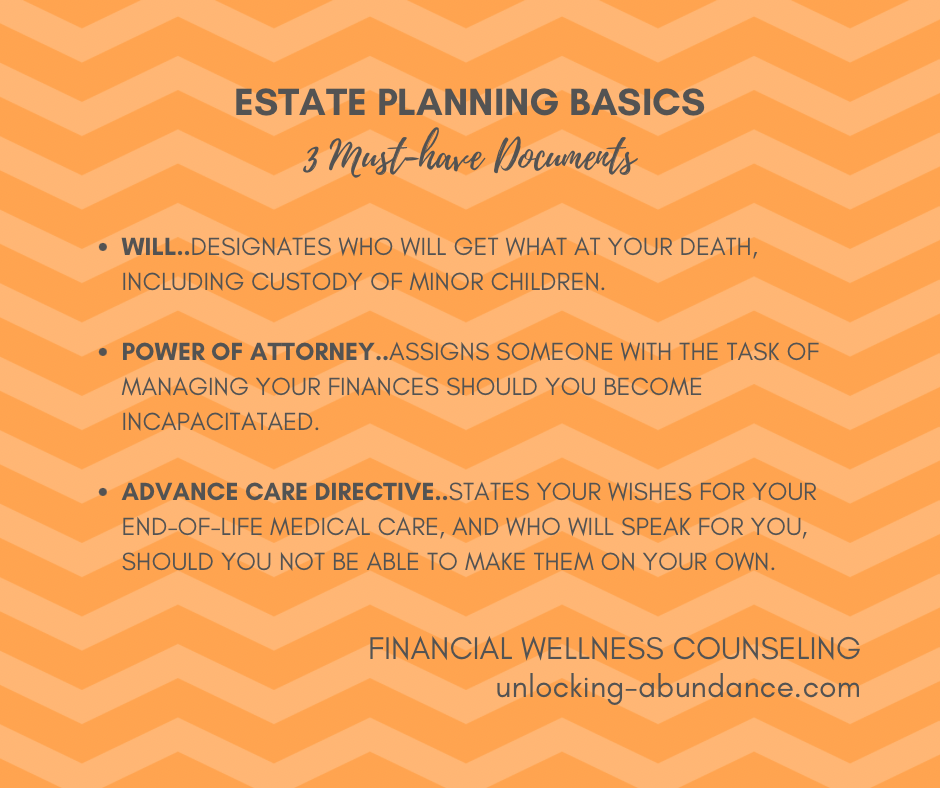
Three Important End-of-Life Documents
The Will
What it is: Upon death, a will is a list that was made in advance in order to distribute assets including property, vehicles, pets, etc. The will also designates custody/care of minor children. This documents essentially says who gets what, and how much of it. An “Executor” is chosen, and it’s the job of the Executor to read the Will and let interested parties know what it says. The Executor will make sure that the specifics of the will are carried out. Executors may or may not be financially compensated.
Why it’s important: The will is particularly important if there is further care needed for minor children. For example, if both parents were to travel together and something terrible happens, the will is the end-all document that reflects their personal wishes for who will continue to care for their children. The will is also your opportunity to have assets split up the way you want, even recognizing unmarried partners who may have no legal right.
Note: this document needs to be updated at major life changes.
What if I don’t have one: A whopping 70% of people do not have a will. If someone dies without a will, “Intestacy Laws” kick-in, which vary by state.
Washington State Intestacy Law Example: If there is no Executor chosen, the court will intervene to choose a family member or appoint an individual to distribute assets. Assets typically go to next of kin (children), and if married, half to spouse. If unmarried and no children: parents, then siblings. Unmarried partners may not be acknowledged and have no legal right to property. The court will decide what they think is best for the care of any minor children.
The Durable Power of Attorney (POA)
What it is: While living, this document designates who will handle legal and financial matters on your behalf if you become incapacitated, or physically/mentally unable or unwilling. An “Agent” will be determined and that person will have access to the specific transactions and responsibilities of the document. Dates and timelines will be specified. For example, a Financial POA might list duties allowed as bank transactions, paying bills, receiving income and Social Security, etc. The document expires upon the issuer’s death.
Why it’s important: This is the opportunity to designate whomever you trust to look out for your financial well-being, whether it be a friend, partner or family member. This document may be changed or updated anytime while you’re mentally/physically able.
Note: the fact that it is Durable means that it continues to be valid even while you are incapacitated. If not labeled as durable, the document may only be enforceable while you’re of sound mind.
What if I don’t have one: Family members will have to petition the court for access to finances, which could be costly and timely. The person you may have intended to make specific decisions on your behalf may have no legal right to do so.
The Advance Directive (aka Living Will)
What it is: This document specifies your wishes for end-of-life medical care, and who will make those decisions for you.
Why it’s important: The Living Will makes clear your opinions on sustaining life support or not, should you be unable to speak for yourself. It takes the burden off of family and friends to consider what you might want while under medical care.
What if I don’t have one: A family member, who you might not have chosen given the opportunity, will have to make what might be difficult decisions for you.
Next Steps
Identify who will be impacted by your death and how. Make a list of your’s, or if planning for a loved-one, their specific needs. Plan ahead by filling out the necessary documents by hiring an Estate Planning Attorney or using a DIY option like LegalZoom.
If you do not have these documents in place, understand the laws where you live, by state.
While acknowledging that even thinking about the need for these documents can be difficult, talking about them with the people you love most and confronting the inevitable, may actually relieve stress by allowing you your own agency and control, through preparation.
How good would that peace-of-mind feel, knowing that you’ve made it that much easier on yourself, and your family, by taking action now?
 Unlocking Abundance