ICYMI: Last week, the Security and Exchange Commission (SEC), who Nationally regulate investing, approved new Exchange Traded Funds (ETF’s) that track the performance of Bitcoin itself. By doing this, they essentially provided a safer, more secure and accessible, way to dabble in Bitcoin, one of the most popular cryptocurrencies. This move opened the door and sends a supportive message that cryptocurrency is here to stay.
Read below for a few more details, and how you might want to approach cryptocurrency, or any investments for that matter. –>Not investing advice–just some friendly financial literacy!
As a refresher, ETF’s are a popular (and usually lower-fee) choice for investing that are essentially baskets of funds that trade anytime of day, like a stock. They are known for providing diversification, rather than putting all of your money into one company.
These new ETF’s, specifically, match what is happening with the value of Bitcoin. Meaning, if Bitcoin goes up, the worth of your shares in the ETF go up, if Bitcoin goes down, the worth of your shares go down.
These new funds opened the door to allow investing in cryptocurrency to be more accessible to the masses. They are offered at some of the most popular and trusted brokerage firms like BlackRock, Fidelity, etc. The ease is in the investing experience itself, as traditional ownership of Bitcoin was unregulated and required you to have a digital wallet and a pin. If you lost that pin you no longer had access to your money, at all.
How Risky is Investing in Bitcoin?
Still a debatable topic. Cryptocurrency is so new, relative to other traditional investment types, that there isn’t as much history available to judge future performance. The history we do have is filled with volatility.
Bitcoin’s Most Recent Performance:
Since rumors typically drive performance, the price of Bitcoin doubled in value simply as talk of the SEC’s possible-approval grew. Since the SEC approval itself, however, the price has fallen back.
Should You Invest in Bitcoin?
Investment Advisors generally say no more than 3% of all of your investments should be in cryptocurrency if you’re concerned about risk, and that any auto-rebalancing features you might have set up should not be calculated around the value of cryptocurrency. The fluctuation in that sector is so great that your whole investments would rise and fall to keep pace. That could be a disaster.
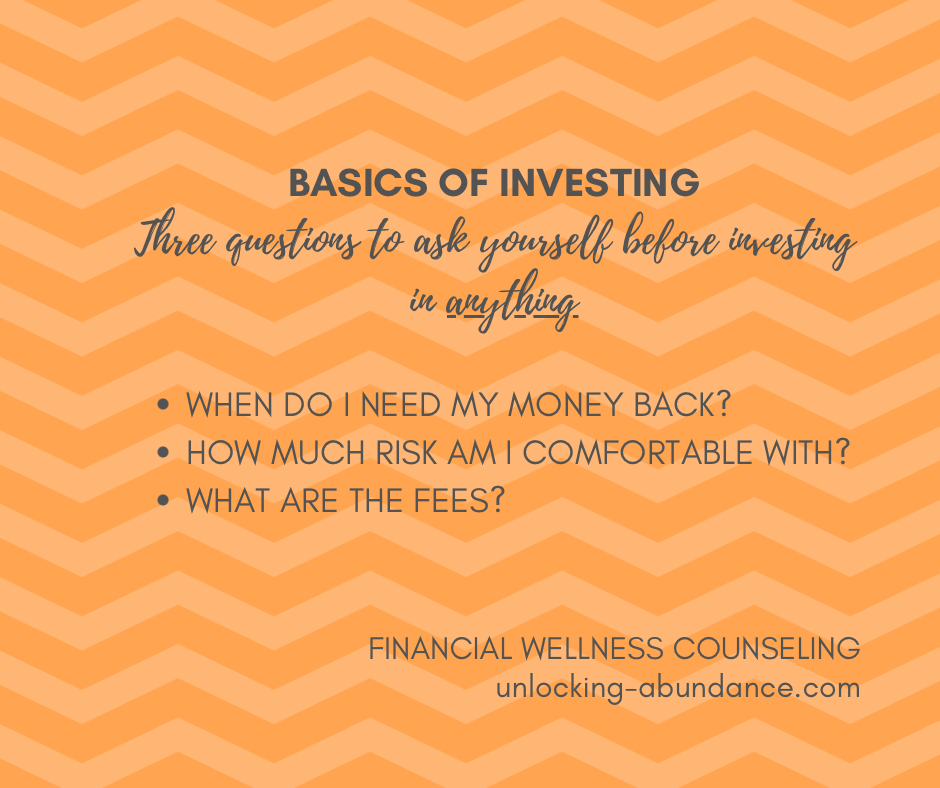
Before You Invest in Anything, Ask Yourself the Following Questions:
–>”When Do I Need My Money Back?”<–
If you need the money in 7 years or less, some advisors will tell you to leave it out of the market all together because the ups and downs can take longer than that to smooth out. A few options for low-risk places to stash cash would be High Yield Savings Accounts (HYSA), Certificates of Deposit (CD) or Money Market Accounts.
–>”How Much Risk Am I Comfortable Taking with My Money?”<–
All investing involves risk, think about the amount of money you’re comfortable with having in high-risk investments (stocks, cryptocurrency) versus lower risk categories (like Bonds and cash). Read up on how to allocate these in a balanced way that makes sense for your goals, or talk to an investment professional.
–>”What are the Fees Associated with This Investment?”<–
Read the fine print before you click the purchase button on any investment, and understand how the fees are structured. Some are at the time of purchase, while others are only when you sell. Also, understand the type of account you are using and fees associated with the taxable or non-taxable advantages.
Think about where you have your money stashed right now. Is it performing for you in the way that you want? What changes might you make that are in line with your personal risk tolerance?
 Unlocking Abundance