
When it comes to methods for eliminating Student Debt, another new policy is gaining steam! In November of 2022, The Biden Administration offered a new path for those filing bankruptcy that essentially makes it a little bit easier for Student Loan debt to be discharged.
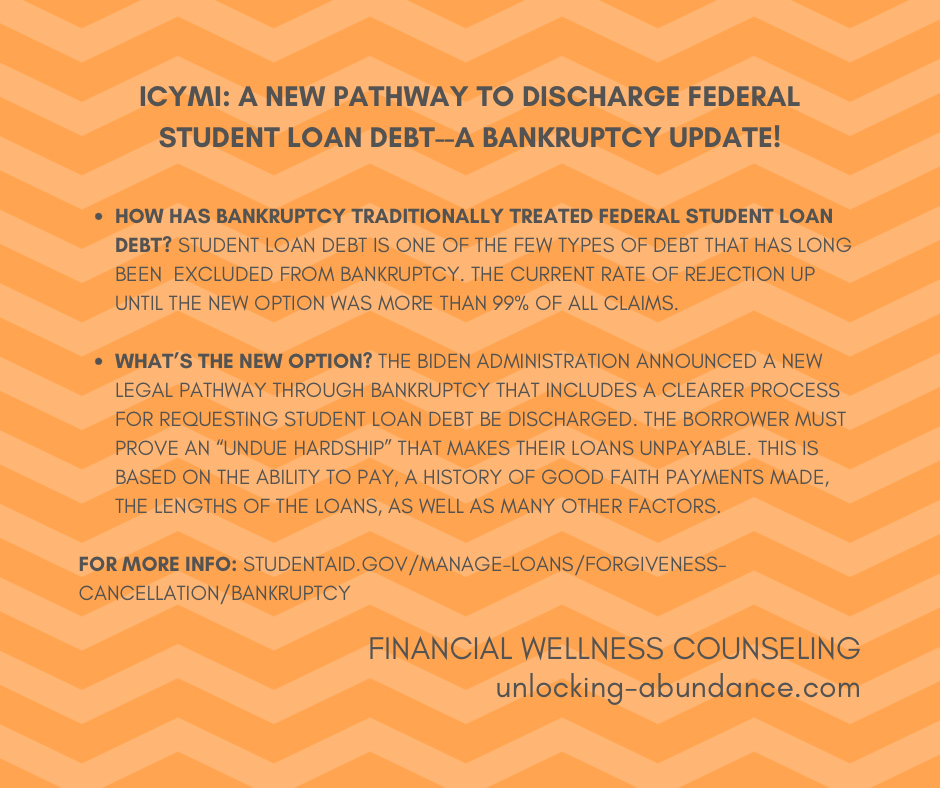
This is huge news, because, for the last several decades nearly all of Student Loan debt was denied in bankruptcy with a success rate of just 0.1%. There is now a new separate (and, reportedly, more expensive) filing called “Adversary Proceeding” that is finally gaining a little traction and getting borrowers’ results. This is a system that aims at the request for Student Loan debt to be discharged, specifically, and so far, it is working–albeit very slowly.
If borrower’s can prove an “Undue Hardship” to being able to pay their Student Loans (there are several boxes you must tick to qualify, some of which are: inability to pay, showing a good faith with payments made, the age of the loans, etc.) partial, full, or restructuring of the loan terms may be granted. The new process makes it easier for borrowers to identify if they even meet the qualifiers up front.
As with all bankruptcy, a bankruptcy judge still makes all final decisions, but now there are much clearer standards the attorneys must meet in order to make recommendations to the judge. “The new process will help ensure consistent treatment of the discharge of federal student loans, reduce the burden on borrowers of pursuing such proceedings and make it easier to identify cases where discharge is appropriate.” —Office of Public Affairs
Pro’s & Con’s of Filing for Bankruptcy (not advice, speak to a bankruptcy attorney!):
As we all know, bankruptcy is usually a last resort to getting out of serious debt. This is because of the negative consequences of filing:
–Lowered Credit Score
–Decreased Access to Credit in the Future
–Loss of Tax Refund
–Possible Loss of Assets
–Harder Time Renting or Becoming Employed
Bankruptcy stays on your public record for 7-10 years, and then you may be legally required to let a Lender or Landlord know if you’ve ever filed, forever. That said, there may be individual cases due to life circumstances in which borrower’s simply cannot pay off their debts. Bankruptcy can be helpful to some individuals by not only discharging some debt (not all debt is allowably discharged in bankruptcy–child support, criminal fines, etc. are not eligible) it can also stop foreclosures, evictions, repossessions and utility shut-offs.
A Few Ways to Tackle Debt in Order to Avoid bankruptcy:
–Contacting Creditors to Negotiate the Debt
–Working with a Financial Counselor (working with a Credit Counselor is required for most people filing for bankruptcy anyway)
–Using a Debt Management Service (FYI, any discharged debt may be taxed as income)
The most important piece of information here is that you have options in which to deal with your debt. For more information on discharging Student Loan debt through bankruptcy click here.
 Unlocking Abundance