
Since we know what an emotionally-loaded subject money can be, as it directly tugs on our feelings of safety and survival, it’s no wonder that it’s one of the most common reasons that couples fight, or ultimately, separate and/or divorce.
According to a Fidelity Investments study, 44% of couples say they argue about their finances, and 1 in 5 call money their greatest relationship challenge. Let’s dig into why money causes so much conflict, what exactly Financial Infidelity is, and what we can do right now to make this topic a little less triggering.
Why So Much Conflict Around Money?
At it’s core, conflict itself has sometimes been defined as “the place where limited resources and differing goals meet”. It doesn’t take much of a leap to see how that definition could be applied to two people trying to manage their money together.
We all bring so much emotional baggage to the relationship, and most couples do not have the same wiring around managing their money (think: one saver, one spender). The sooner we can get to the bottom of WHY we are the way we are around money, we can open up our understanding of each other’s motivations, goals, and can come up with a plan to use those resources effectively.
Get real share-y; have a discussion about your thoughts/beliefs/philosophies/feelings around money. What are your hard rules and where can you find compromises? Slow down, listen, give and take space to process, and have an authentic desire to understand each other’s values and where their beliefs may be coming from.
Express each of your biggest money fears: the day-to-day impacts and the catastrophic. Ask open-ended questions to make sure you understand specifically, and correctly, what the other person is conveying.
What is Financial Infidelity?
Financial infidelity, in romantic relationships, occurs when couples with combined finances lie to each other about money. A popular dating site polled that 52% of their members think that “financial infidelity” is just as bad, if not worse, as emotional or physical affairs. For 19% of the polled members, it is a deal breaker.
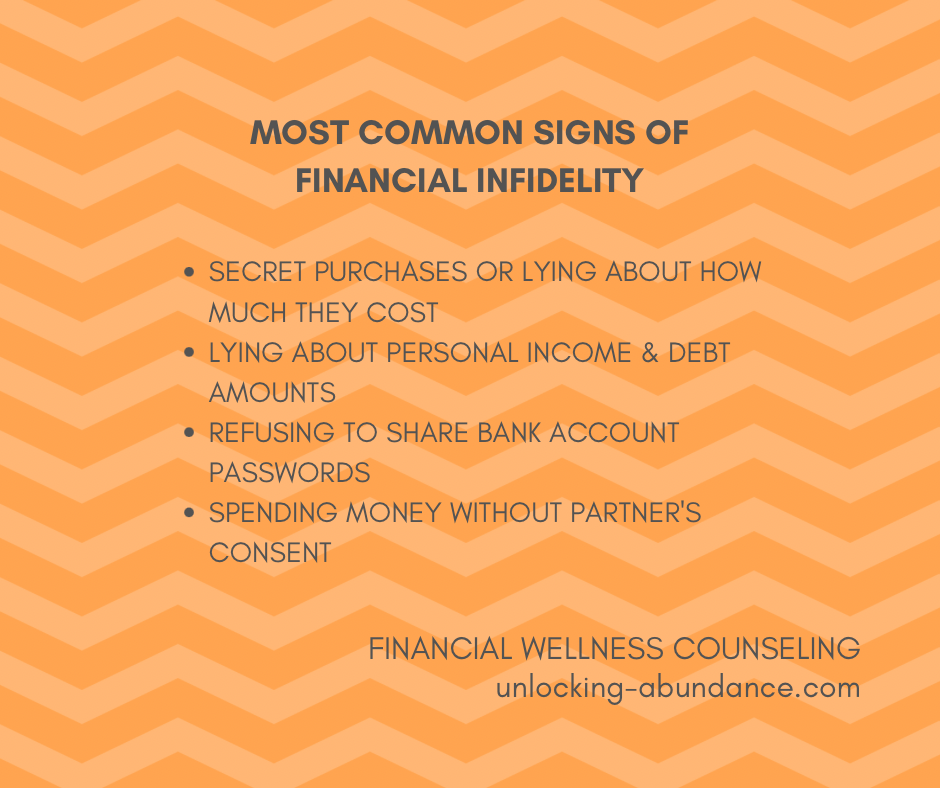
A few signs of financial infidelity are: keeping secret bank accounts, or being secretive or dishonest about the cost of purchases. It could look like not sharing passwords to bank accounts, or not being transparent about all assets and/or debts. In another situation, one party might drain an entire bank account without consent (totally legal, btw!). Perhaps someone loans or spends money without authorization.
Financial infidelity can lead to serious debt, having to take out additional loans, credit score impacts and even loss of assets.
One important caveat is that financial infidelity, which can look like many different scenarios and exist between all types of relationships, is that it is different than Financial Abuse. 99% of domestic violence victims are also victims of financial abuse.
The best antidote to financial infidelity is openness, honesty and transparency. It’s crucial to not to delay those foundational money conversations, or put them off until something disastrous happens. Make managing your money together a team sport by making it a ritual, or regular check-in, to talk about your money together. It may be awkward the first couple of times, but the more time you do this, it will de-sensitize the topic. Use these meetings to review your goals, the status of those goals, account balances, and any other feelings you’re having about your finances.
If you find yourself right in the heart of discovering a financial infidelity, find out why decisions were made that were made, and specifically, the financial impacts of those decisions.
Keep in Mind:
Whether you’re experiencing financial conflict, or infidelity, both topics are capable of producing a physiological response that may make conversations difficult, or end your capacity to have them productively in that moment. If you feel that “flooding” of fight/flight/freeze chemicals, ask for what you need (whether it be space, a hug, etc.). Make sure to set a specific time to regroup when you’re feeling emotionally resourced and focus on listening, on your goals, and as working as a team on next best steps.
Not making any headway, or need the support of a neutral third party or expert? No shame in seeking out a couples or financial therapist. There is hope, and there is help.
 Unlocking Abundance